
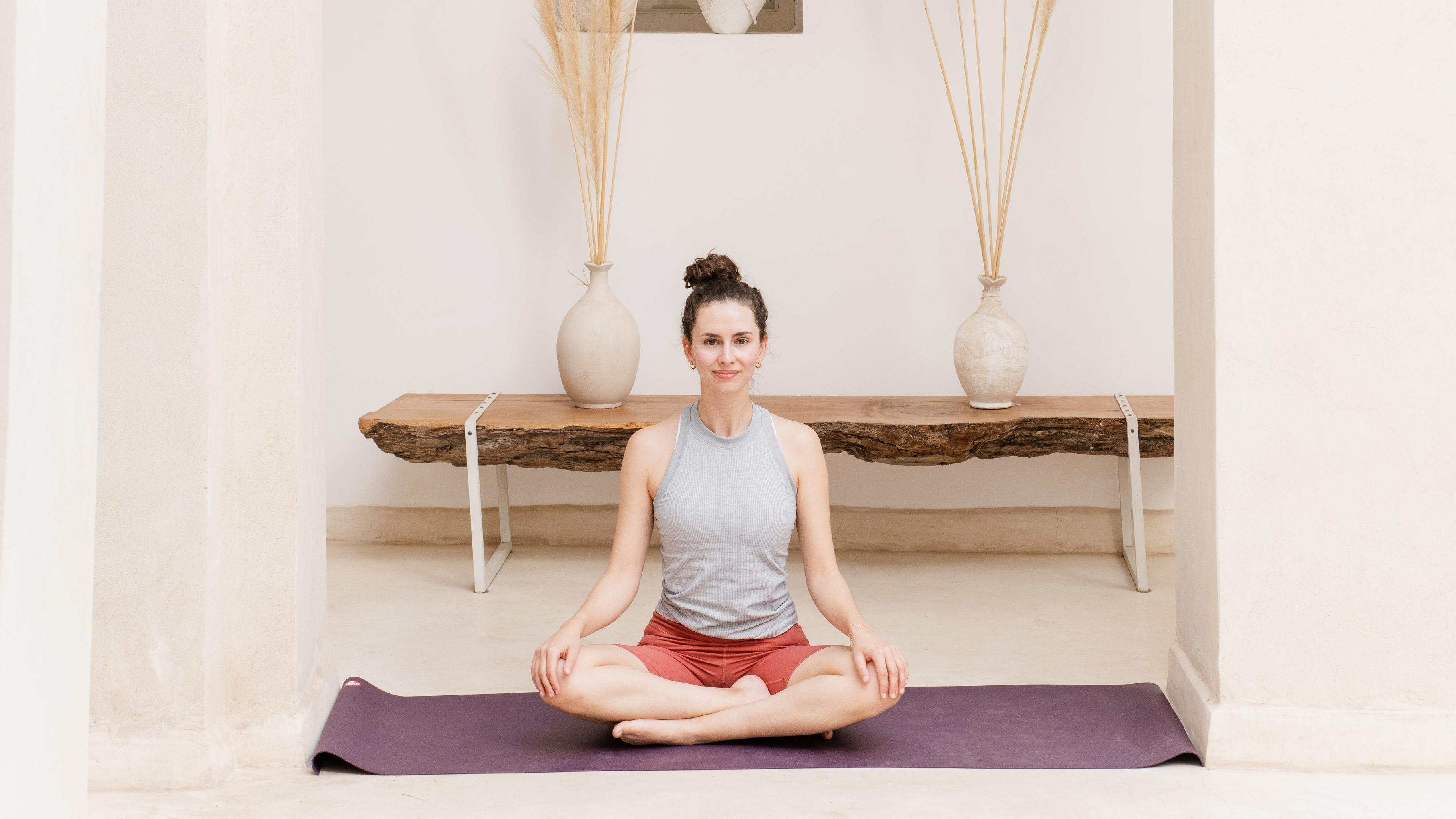
I’ve meditated, on average, 10 minutes every day for the last six years. That’s just about 16,500 minutes. Meditation is the way I ground myself at the top of my morning, every day. Meditation focuses my mind, allows me to come back into my body after sleep, and prepares me for the unpredictable, the chaos that is every day on this planet. These are my tips and tricks, hard-won over the last six years, that I wished I had known six years ago when I was just starting my meditation journey.
Here’s what you need to know:
Meditation does not mean you “clear your mind”. This is a huge misconception about meditation. Frankly emptying your head of thought is a losing battle. When you meditate you give your mind an object of focus to return to, whether that’s the breath, a physical object like a candle, or something internal like a glowing orb of light that spreads warmth throughout your body.
Your meditation setup should be simple. You don’t need a fancy meditation cushion, though they’re nice. All you need to do is elevate your hips above your knees (sitting on a firm pillow or two works) so you can sit tall comfortably. If sitting isn’t comfortable for your body, lying down is fine too—my only caveat here is, I tend to fall asleep when I lay down, so give seated meditations a shot for a while before you default to napping – I mean – lying down meditations.
Carve out a dedicated meditation space (even a small one) in your home. Reserve your bedroom for sleep and rest. Move a pillow or two out of your bedroom and into another quiet space and meditate there. This dedicated space helps set your mind before you even sit down on the cushion.
Meditate first thing in the morning. For me, I need to meditate before my day fills up with obligations. In getting it out of the way, so to speak, I am less likely to talk myself out of it. I also find that meditating later in the day doesn’t give me the same focus and attention benefits.
Expect inconsistency in how meditating feels. Some meditation sessions leave me feeling calm and centered; others I fail to power through the distractions and noise. The practice becomes showing up daily regardless of the outcome or how it makes me feel.
Make your meditation practice consistent and enjoyable. Build a small ritual around it: light a candle, turn on a salt lamp, use incense. Give yourself something to look forward to. Meditation should feel like a treat, not a chore.
Use a guided app as you’re getting started. A timed or guided meditation gives you the structure to learn how to meditate from an experienced teacher. I personally enjoy Headspace.
Start small. Even 1, 3, or 5 minutes a day counts. Consistency matters more than duration, especially at the start.
Find an accountability buddy. Set an intention with a partner, roommate, or friend such as “I’m going to meditate every morning this week”, and check in with each other at the end of each week. Eventually you won’t need the checkin, but it will help you establish the consistent regularity of meditation.
Trust that you can’t “do it wrong.” Meditation happens in your head; there’s no external performance here you could possibly mess up. Showing up and paying attention to your breath is enough. Let your breath be enough.
Know that meditation is a lifelong, evolving practice. What your practice looks like now (seated, guided) is almost guaranteed to shift over the years—lying down, walking meditation, even a silent retreat. There’s no finish line, no gold star, no medal you win for being the best at meditation.

A note on verbiage: meditation vs. mindfulness
I define meditation as the ancient, intentional practice—often—of sitting and focusing on something specific, like the breath. Mindfulness, to me, is more “meditation light”: Mindfulness is a buzz word. Ronald Purser calls it ‘McMindfulness‘. I’ve heard ‘mindfulness’ or ‘mindful’ applied from everything from eating to cleaning your house to walking. Mindfulness in my experience as a yoga teacher and long-time meditator is lighter on the depth and philosophy behind the practice. Meditation is an intentional, specific practice. Mindfulness is a bit more passive, a bit more general.
FAQ
Do I need to clear my mind completely to meditate correctly?
No. That’s one of the biggest misconceptions about meditation. Meditation is about giving your mind an object to focus on, like the breath, not eliminating thought altogether.
What if I fall asleep when I try to meditate lying down?
Try sitting up instead. Elevating your hips above your knees with a pillow or two can help you sit comfortably and stay alert. Or go on a walking meditation.
What’s the best time of day to meditate?
Morning, ideally first thing before your day fills up. You’ll notice more focus and attention benefits than when you meditate later in the day.
Do I need a meditation app to start meditating?
No, but a meditation app can help provide structure. Guided or timed meditations (via apps like Headspace or Calm) can keep you from checking the clock or your phone mid-practice. If you’d rather, find a meditation teacher in your city and go to in-person classes or trainings or explore my YouTube channel for free meditation and yoga videos there.
How long should I meditate as a beginner?
Even a minute or a few minutes a day is a great starting point. Building the habit matters more than the length of each session.
What’s the difference between meditation and mindfulness?
Meditation is the more intentional, focused practice, often centered on the breath. Mindfulness is a broader, more casual application of that same awareness to everyday moments, like eating or cleaning or walking.
How do I stay consistent?
Pair it with a small ritual you enjoy (a candle, a favorite corner of your home) and consider finding an accountability partner to check in with weekly.
Leave a Reply